Inspiration
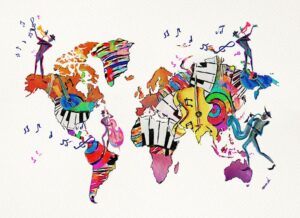
My artifact, Listen to the World, was inspired by my love of music and my belief that learning about different cultures can help create a welcoming and inclusive classroom. Music is a way for people to express themselves, share traditions, and connect with others, even when they do not speak the same language. I wanted to create something that would encourage students to be curious about the world and recognize that every culture has meaningful stories and traditions to share. The world map features sheet music and QR codes that link to YouTube videos of traditional music from different countries. Rather than simply displaying information, I wanted to create an interactive artifact that invites students to stop, scan a code, listen, and learn.
Where my idea began
I started with the idea of combining two things I enjoy: music and learning about the world. I have always felt that music is a powerful way for people to express themselves, share their stories, and connect with others. Every country and culture has musical traditions that reflect its history, identity, and experiences.
At first, I was thinking about creating a world map with music from different countries. As I developed the idea, I began thinking more about how it could connect to EDIDA. I wanted it to be more than a map on a classroom wall. I wanted students to interact with it, ask questions, and learn something new.
The QR codes became a way to bring the map to life. Instead of simply looking at a country, students could scan a code and listen to music connected to that place. This creates an opportunity to explore the world through listening and curiosity.
My Design Process and Learning Journey
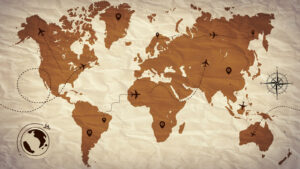 Bringing my idea to life involved some trial and error. It first started with finding a map I wanted to use. I searched online and finally found one I wanted to use as my backdrop. Then I noticed there was no Antarctica, and so I thought I would add in, later on myself.
My next challenge was figuring out how to create QR codes and connect them to music without having to pay for a website or subscription. I explored different options, but some websites advertised free QR codes and then required payment to use them. I started with:
I eventually discovered that Canva had a free QR code generator. I never knew this was a feature on Canva. This allowed me to connect QR codes directly to YouTube videos featuring traditional music. Once I figured that out, I was able to start putting the different pieces together.
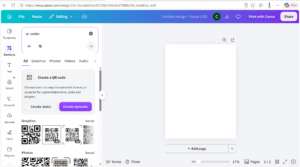
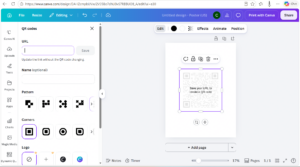
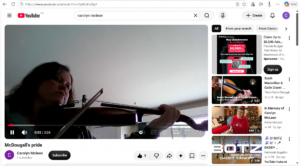
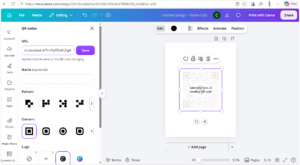
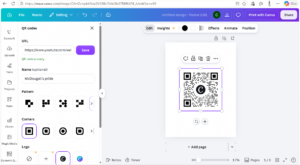
After starting with Eastern Canada, where I have fiddled around Cape Breton, I took a YouTube video I had made 12 years ago, and added the QR Code. I also had conversations with my classmate Eva, and we bounced ideas off one another. Talking through my ideas helped me think about the purpose of the artifact and how I could make it more meaningful. How I could make it for my future classes. My first thoughts were QR Codes with languages attached, but then I thought, languages are not me, Music is. As I worked on the map, my thinking shifted. What started as a music and geography idea became something connected to cultural identity, representation, inclusion, and belonging. I began thinking about how this could become a resource that future students could add to rather than something that was simply finished once I completed it.
Making Music Interactive
One of the important parts of this artifact was making sure students could actually interact with it. Each QR code connects to a YouTube video featuring traditional music from a particular country.
Students can scan a code, listen to the music, and begin asking questions. What instruments can they hear? Where does the music come from? What might the music tell us about the culture or traditions of that place? Why might music be important to the people who share it?
My first QR Code I created lead to me playing the violin/fiddle.
I like that students do not need to know anything about the music before they begin. They can start by listening and then explore further. It gives them an opportunity to learn through sound, visuals, technology, and discussion. This part of the project also reminded me that technology does not need to be complicated or expensive to create meaningful learning opportunities. Plus anyone can use technology. As one of my goals for Practicum, technology is something I will keep working towards exploring and understanding.
Sometimes a simple tool can open the door to a much bigger conversation.
Inspiration: Landfill Harmonic
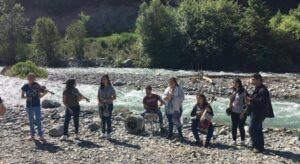 The Recycled Orchestra of Cateura in Paraguay was another inspiration for my thinking. The orchestra began under the guidance of Favio Chávez, who developed a music program for children living in a community beside a landfill. With the help of local recycler Nicolás Gómez, discarded materials were transformed into musical instruments, allowing children to participate in music-making despite limited access to traditional instruments. Their story is featured in the documentary Landfill Harmonic (2015).
Since I first heard and saw the Landfill Harmonic, they have been an inspiration that I have brought to 2 of my Practicums, doing projects inspired by them. What stands out to me is how creativity can turn limited resources into meaningful opportunities. The orchestra challenged the idea that making music requires expensive instruments and showed how resourcefulness can open doors for people who might otherwise face barriers to participation.
Thinking Differently…
This encouraged me to think differently about my own artifact. I did not need an expensive program or a paid website to create something meaningful. By using a world map, sheet music, free QR codes, and existing YouTube videos, I could create an interactive resource that connects people through music and cultural traditions. This was a way to connect to my passion for music. The Recycled Orchestra also reminds me that inclusion involves more than having people present in a space. It means creating opportunities for people to participate, contribute, and have their voices heard. This is something I want to carry into my future classroom.
Connecting My Artifact to EDIDA
For me, Listen to the World connects to EDIDA through representation, cultural identity, curiosity, and belonging. Every student enters a classroom with their own experiences, knowledge, traditions, and perspectives. I want students to recognize that these differences are something to value and learn from.
The world map provides an opportunity to explore cultures beyond what students may already know. It encourages students to listen, ask questions, and develop an appreciation for different musical traditions. Rather than making assumptions about a culture, students can begin by being curious and learning more.
This connects to Kye’s (2020) discussion in Who Is Welcome Here? and the importance of creating spaces that recognize and support students’ cultural identities. I want my classroom to be a place where students feel that their experiences matter and that they belong.
I also recognize that students should never feel pressured to share personal or cultural information. The map allows everyone to participate by exploring something new, while also leaving room for students who choose to share music or traditions that are meaningful to them.
To me, inclusion means creating opportunities for everyone to participate in ways that feel comfortable and meaningful.
Bringing It Into My Future Classroom
I do not see Listen to the World as a finished project. I see it as something that could continue to grow with each class.
Students could choose a country, research its traditional music, learn about the instruments used, and explore the history or cultural significance behind the music. They could then create a QR code linking to a music selection and information about what they discovered. Their contribution could be added to the classroom world map.
Students could also share music that is meaningful to them or connected to their family traditions, if they wish. However, they would not be expected to represent an entire country or culture. There would always be opportunities to explore unfamiliar places and traditions as well.
This activity could connect to several areas of learning, including music, geography, social studies, language arts, and digital technology. It could encourage research, collaboration, listening, discussion, and creativity.
Most importantly, students would be helping to build something together. As the map grows, so does the collection of stories, traditions, and perspectives represented in the classroom.
Final Reflection: Different Voices, Different Stories, One Community
When I first started this project, I was simply looking for a creative way to connect music and countries around the world. As I worked through the process, I began to see how it could become something much more meaningful.
I learned that creating an artifact does not always require expensive materials or complicated technology. It takes creativity, problem-solving, and a willingness to try different approaches. I also learned that sometimes an idea develops into something different from what you first imagined.
What I hope students take away from Listen to the World is that there is so much to learn when we take the time to listen. Music can introduce us to different places, traditions, and experiences. It can create connections and remind us that although our stories may be different, we all have something to contribute.
In my future classroom, I want to create an environment where students feel welcome, where differences are respected, and where everyone has opportunities to participate and learn from one another.
Different voices, different stories, one community.
Resources
Kye, H. (2020). Who Is Welcome Here? A Culturally Responsive Content Analysis of Makerspace Websites. Journal of Pre-College Engineering Education Research, 10(2), 1–. https://doi.org/10.7771/2157-9288.1190