From Strings to Insights: Personal Reflection Models on Teaching Violin
Teaching is a lot like conducting an orchestra, each student is a unique instrument, with its own tone, tempo, and personality. As teachers, we don’t just play the notes, we listen, adjust, and guide to create harmony. Reflection is the conductor’s baton, helping us pause, evaluate, and fine-tune our approach so every learner can shine. In this post, I will explore two reflective models: Gibbs’ Reflective Cycle and What? So what? Now what? and how they have shaped my twenty years of teaching violin, supporting both personal growth and professional competence.
Gibbs’ Reflective Cycle has six stages:
-
Description
-
Feelings
-
Evaluation
-
Analysis
-
Conclusion
-
Action plan
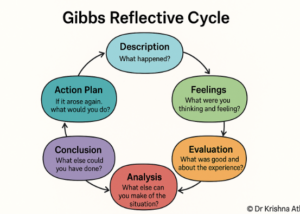 Gibbs Reflective Cycle Model prompts deep introspection about what happened, how it made you feel, why it mattered, and what you’ll do differently next time. It encourages detailed emotional and cognitive processing before moving to action
VS
Driscoll What? So what? Now what? Model has 3 Core Questions
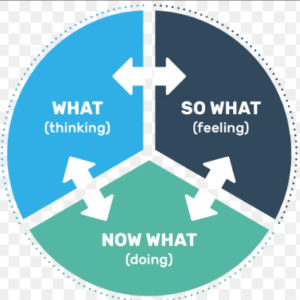 ‘What?‘ helps you describe the situation you want to learn from. You should identify the facts and feelings of the situation.
- ‘So What?‘ allows you to extract the meaning of ‘What?’. Moreover, you should question what knowledge you and others had in the situation, and what knowledge or theories that could help you make sense of the situation.
- ‘Now what?‘ allows you to create an action plan for the future based on the previous questions.
The Driscoll What? So what? Now what? Model is easy to remember and quickly guides someone from experience to insight to action without requiring as much depth on feelings or evaluation.
My Experience and using the Driscoll What? So what? Now what? Model
 What?
What?
During my first years of teaching violin privately, I noticed a pattern with several students. They were improving technically but their motivation was dropping. A few began cancelling lessons more frequently, and some eventually stopped coming altogether. One student in particular stands out. They practiced their scales and pieces faithfully, yet each lesson felt flat. Their playing lacked energy, and they rarely spoke about their practice. I continued following my usual structured lesson plan, assuming that consistency and technical progress would naturally lead to engagement.
Over time, it became clear that while my teaching approach was sound from a technical standpoint, it wasn’t connecting with this student on a personal or emotional level. I was teaching to the curriculum I had in my head and had been taught, rather than to the learner in front of me.
So what?
This experience made me realize that technical progress does not always equal meaningful learning. Students can “do the work” without feeling invested in it. Music is deeply personal, and when lessons don’t connect to a student’s interests, goals, or sense of identity, motivation can fade even if improvement is happening on paper.
This reflection model made me think back to my original assumptions I had when I started teaching as a late teen, that students would automatically be motivated by structured progression and skill development. In reality and as I grew as a teacher, I learned that engagement grows when students feel heard and when learning feels relevant to their own musical tastes and aspirations. The issue wasn’t the content of my teaching, but the lack of student voice in shaping it.
Now what?
 Moving forward, I committed to making student goals a central part of my teaching practice. At the start of each term, I asked students what kind of music they want to play, what they hope to achieve, and how they feel about their learning. I intentionally build repertoire around their interests personally, whether that means including a favourite song, preparing for a performance, or working toward a personal challenge.
I also paused more often during lessons to check in emotionally, not just focus on the technical.
I would ask :
- How does this piece feel?
- What part feels hard?
- What part feels exciting?
These small shifts have led to stronger relationships, higher engagement, and more joyful music-making. This reflection reminded me that effective teaching is not just about delivering content, it’s about building connection and keeping learning meaningful.
Difference
Gibbs’ model talks about exploring feelings and evaluation, whereas What/So What/Now What focuses on description → meaning making → future planning, in a more concise way.
Reflection to the Teacher Education Competencies
Gibbs’ Reflective Cycle encourages a thorough examination that moves from Description and Feelings through Evaluation, Analysis, Conclusion, and Action Planning. This depth mirrors competencies such as understanding the complexity of teaching and learning (Competency 4), and developing an awareness of one’s worldview and how it relates to others’ worldviews (Competency 1). Gibbs’ model pushes teachers to acknowledge how their beliefs, assumptions, and emotional responses influence decisions , a key part of developing a professional identity.
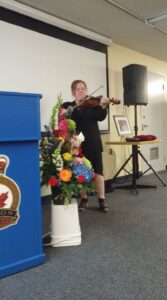 My violin teaching experience with a student who was technically improving but disengaged, Gibbs’ cycle helped me explore not just what happened but how I felt and why my assumptions about motivation mattered. This mirrors the growth mindset competency: reflecting on how one’s beliefs shape relationships and learning outcomes (Competency 2).
The What? So what? Now what? model, by contrast, is more streamlined. It moves quickly from experience to meaning‑making to action. This resonates strongly with competencies tied to reflective and reflexive practice (Competencies 4 and 12) and with pedagogical planning that is context‑appropriate and personalized (Competency 11). In my violin teaching story, the What? So what? Now what? framework helped identify the core issue (student disengagement), interpret its significance (technical progress alone wasn’t enough), and plan intentional changes (incorporating student goals and interests). This kind of reflection supports teachers in continuously improving their practice and engaging more effectively with learners, bringing that connection in and fulfilling the competencies of planning for learning and instructional strategies (Competency 11).
Both Gibbs’ Reflective Cycle and the What? So what? Now what? model are powerful tools for teachers, each offering unique strengths. Gibbs helps us explore the emotional and cognitive layers of our practice, while What? So what? Now what? guides us quickly from experience to action. They not only enhance self-awareness and professional growth but also directly support key teacher competencies, from understanding learners to creating responsive, meaningful learning environments. For any educator, whether teaching violin or any subject, it integrates reflective models into daily practice ensuring that reflection leads to insight, insight leads to action, and action leads to better learning outcomes for all students.
Resources
What So What Now What (Reflective Model & Examples) | Thinkific
Diligent Elaboration of Driscoll Model of Reflection
monday sidekick: AI that actually works
Teacher Education Program Competency Guide | UVIC Teacher Education
Images are my own pictures taken by me
Carolyn, your reflection regarding: ‘Music is deeply personal, and when lessons don’t connect to a student’s interests, goals, or sense of identity, motivation can fade even if improvement is happening on paper.’ speaks volumes. Your teaching continuously needs to be pertinent and relevant to the learner, afterall that is your target audience!
Thank you for this post!
Judi