Learning to Walk Gently
Reading Braiding Sweetgrass by Robin Wall Kimmerer, has helped me slow down and reconnect with the world around me. It made me more aware of how I notice nature in my everyday life and how humans respond to the natural world, sometimes with care and gratitude, and other times with control or distance. The book encouraged me to pay attention not just to the environment, but to our relationship with it, and to reflect on how easily we forget that we are part of the living world, not separate from it.
One thing that stayed with me is the way the author describes learning from the land itself. Instead of seeing nature as something to use or manage, the book invites us to see the land as a teacher. This perspective feels especially important in education. So often, students experience science from a distance through textbooks, worksheets, and screens. Braiding Sweetgrass reminds me that learning can be rooted in direct experience. It is about noticing patterns in plants, observing seasonal changes, and forming personal relationships with the places we live. These kinds of experiences can shape how students care for the world around them.
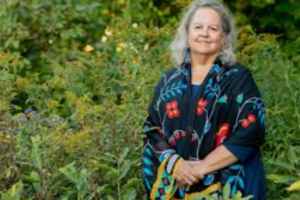
Robin Wall Kimmerer

One chapter that stood out to me deeply was when the author shared her experience of wanting to study science, but being discouraged by administration and guided toward art instead. The message she received was that science was not where she belonged. This moment was powerful because it showed how systems can unintentionally limit students based on assumptions about who “fits” in certain spaces. Even though she loved both art and science, she was subtly told that one path was more acceptable for her than the other. This part of the book made me reflect on how often students are boxed into labels or steered away from interests that don’t match what others expect of them. It also reminded me how important it is for educators to recognize and support the full range of students’ identities and strengths, rather than narrowing their possibilities.
The author’s experience of blending science and art showed me that ways of knowing don’t need to be separated. As a future music teacher, this feels especially meaningful to me. Music is full of patterns, emotion, and inquiry, just like science. When students are allowed to move between creativity and analysis, storytelling and observation, they learn in a more whole and connected way.
Education is not just about what students can take from the world, but also how they learn to care for it and contribute to it. Learning becomes a relationship built on responsibility, respect, and gratitude, rather than just information being passed down.
Reflection: What This Means for My Future Classroom
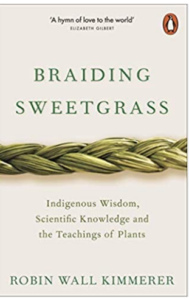 Reading and listening to it on Audible, Braiding Sweetgrass has changed the way I think about learning and teaching. It helped me feel more connected to the world around me and more aware of how humans interact with nature and with each other. In my future classroom, I want students to experience learning as meaningful, not just something they consume.
I want to create space for students to explore science through observation, experience, and curiosity, and to feel that their interests and identities are welcomed. I also want to be mindful of the subtle messages we send as educators about who belongs where. No student should feel discouraged from pursuing something they love because of assumptions made about them.
The book reminds me that teaching is about more than delivering content. It is about shaping how students see themselves in relation to the world. If I can help students feel connected to the land, respected in who they are, and encouraged to bring all parts of themselves into learning, then I believe I will be teaching in a way that truly honours both people and place.
Braiding Sweetgrass not only supports science learning, but also offers opportunities for cross-curricular connections. Students can explore science concepts like ecosystems, life cycles, and human-environment interactions while also engaging in literacy through reading, storytelling, and reflective writing. Art can be integrated as students create visual representations of plants, animals, or ecological relationships, and music can be used to notice patterns and rhythms in nature. This aligns with the BC curriculum’s emphasis on inquiry-based learning, multiple ways of knowing, and First Peoples perspectives, allowing students to explore concepts across disciplines while deepening their relationship with the land.
Braiding Sweetgrass emphasizes learning from the land itself, noticing patterns, and building relationships with the natural world. I see a clear parallel between this approach and music: just as the book invites us to observe, listen, and respond to the rhythms of nature, music invites students to notice patterns, follow rhythms, and create harmony. In my classroom, I want students to “hear” the world around them, explore it through observation and curiosity, and compose their own understanding, just as Kimmerer encourages us to learn from the land and weave our knowledge, care, and creativity together.
Resources
Kimmerer, R. W. (2013). Braiding Sweetgrass: Indigenous wisdom, scientific knowledge, and the teachings of plants. Milkweed Editions.