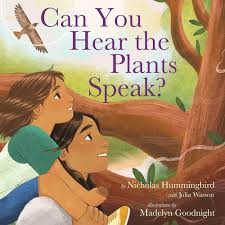
Book Title: Can You Hear the Plants Speak?
Book Author: Nicholas Hummingbird & Julia Wasson
Indigenous/BIPOC
Book Illustrator: Madelyn Goodnight
Book Type: Picture Book
Topics: Science (Life Science, Ecosystems, Plant Biology), Social Studies (Indigenous Cultures, Environmentalism), teaching about plant communication, Indigenous wisdom, and Earth stewardship
Grade Level(s): K-3
Subjects: ELA, Science, Socials, Indigenous
Curricular Competencies
- Observe objects and living things in their environment.
- Ask simple questions about plants and the natural world.
- Make simple predictions about how plants grow and change.
- Sort and classify living and non-living things.
- Use words, drawings, and models to share observations and ideas.
- Demonstrate curiosity and care for the environment.
Curricular Content
- Living things and their basic needs (water, light, air, space).
- Characteristics of plants.
- Local plants and environments. (Add Ktunaxa words to local plants)
- Simple ecosystems and connections between living and non-living things.
- Ways humans can care for plants and the environment.
Book Summary:
This picture book shows the strong connection between people and nature. A young Indigenous narrator remembers spending summers with his great-grandparents, who taught him to listen to plants and see nature like rivers, mountains, and trees as living family members. As he grows older, buildings replace the land and he feels less connected. When he notices a small plant growing through a crack, it helps him feel close to nature again. He starts planting and caring for native plants and shares these lessons with the next generation. The book teaches respect for nature and explains how to care for plants, even in small spaces.
Book Activity:
Students plant and care for seeds to learn how plants grow and what they need to survive. They observe changes over time and learn that plants communicate through signs like wilting, growth, and leaf colour. Students record their observations through drawings and simple explanations. The activity connects scientific observation with Indigenous teachings about respecting plants as living beings. Students link their learning to ecosystems and environmental care.
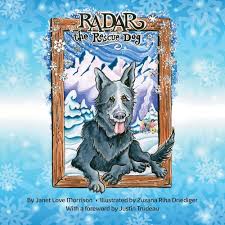
Book Title: Radar the Rescue Dog
Book Author: Janet Love Morrison
Canadian
Book Illustrator: Zuzana Riha Driediger
Book Type: Picture Book
Topics: Outdoors, outdoor safety, skiing, avalanche, resisting peer pressure
Grade Level(s): 4-6
Subjects: science, art, ELA
Curricular Competencies
- Comprehend and respond to texts with increasing complexity.
- Make connections between text, personal experiences, and the world.
- Create written texts that express ideas, opinions, and reflections.
- Use writing to explore issues such as decision-making and peer pressure.
Content
- Narrative texts and personal responses.
- Themes of responsibility, safety, and choices.
- Writing for different purposes (reflection, explanation, opinion).
Book Summary:
Radar the Rescue Dog tells the story of a brave rescue dog who helps keep people safe in snowy mountain environments in Whistler, BC. The book explores outdoor safety, skiing, and avalanche awareness through an engaging story. It highlights the importance of preparation, listening to trusted guidance, and making safe choices. The story also talks about resisting peer pressure when facing risky situations. Through Radar’s actions, readers learn how teamwork and responsibility can save lives.
Book Activity:
Critical Thinking Activity: Outdoor Safety Items
Students work in small groups to decide what safety items should be brought when skiing or spending time outdoors in winter. They discuss why each item is important and how it could help in an emergency. Groups share and compare their choices, encouraging reasoning and collaboration.
Peer Pressure Writing Activity
Students write a short response or story about a time when they felt peer pressure to make an unsafe choice. They reflect on how they handled the situation or how they could make a safer decision. This activity connects the book’s message to real-life experiences and builds self-awareness and decision-making skills.
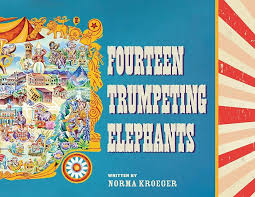
Book Title: Fourteen Trumpeting Elephants
Author: Norma Kroeger
Canadian/Local (Ktunaxa Nation/Kootenays)
Book Illustrator:
Book Type: Picture Book
Topics: Local history
Grade Level(s): 4-6
Subjects: Social Studies, Language Arts
Curricular Competencies
- Ask questions to understand events, people, and places in local history.
- Use evidence from stories, images, and community landmarks to learn about the past.
- Compare past and present features of a community.
- Explain the significance of local landmarks and symbols.
- Communicate ideas using written, visual, and creative forms.
Curricular Content
- Local and regional history of British Columbia.
- Historical events and stories connected to the local community.
- The role of symbols, monuments, and landmarks in remembering the past.
- How communities change over time.
Book Summary:
Fourteen Trumpeting Elephants by Norma Kroeger is a historical fiction children’s book based on a true event that happened in 1926 near Cranbrook, British Columbia. The story is shared by a grandfather with his 10-year-old grandson and others, recounting the escape of fourteen circus elephants into the Kootenay wilderness. It focuses on one elephant, Charlie Ed, who explores rivers, mountains, and even a logging camp during his time of freedom. The book blends storytelling with real local history, making it an example of hidden history. It also explains the origin of the elephant statue at the end of Baker Street in Cranbrook.
Book Activity:
For this local history activity, students learn about the Ed the Elephant statue in Cranbrook and its historical significance. Go visit the Statue on Baker Street. Show pictures of the real Ed. Students then imagine Ed visiting Cranbrook today and create their own short book about the places he might go. They choose local landmarks such as parks, rivers, downtown streets, or schools for Ed to explore. Students draw pictures and write simple sentences to describe Ed’s adventures. This activity helps students connect local history with creativity and storytelling.