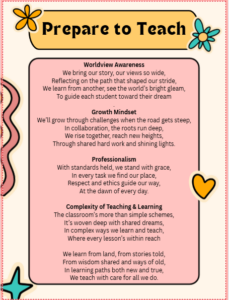
Competency 1: Worldview Awareness
Worldview awareness means understanding that everyone brings their own experiences, culture, and values into the classroom. Teachers are not neutral their backgrounds shape how we see students and learning. Recognizing this helps us teach in more inclusive and respectful ways.
Key Ideas
-
Everyone has a worldview shaped by culture, family, and lived experience
-
Students come with valuable knowledge and perspectives
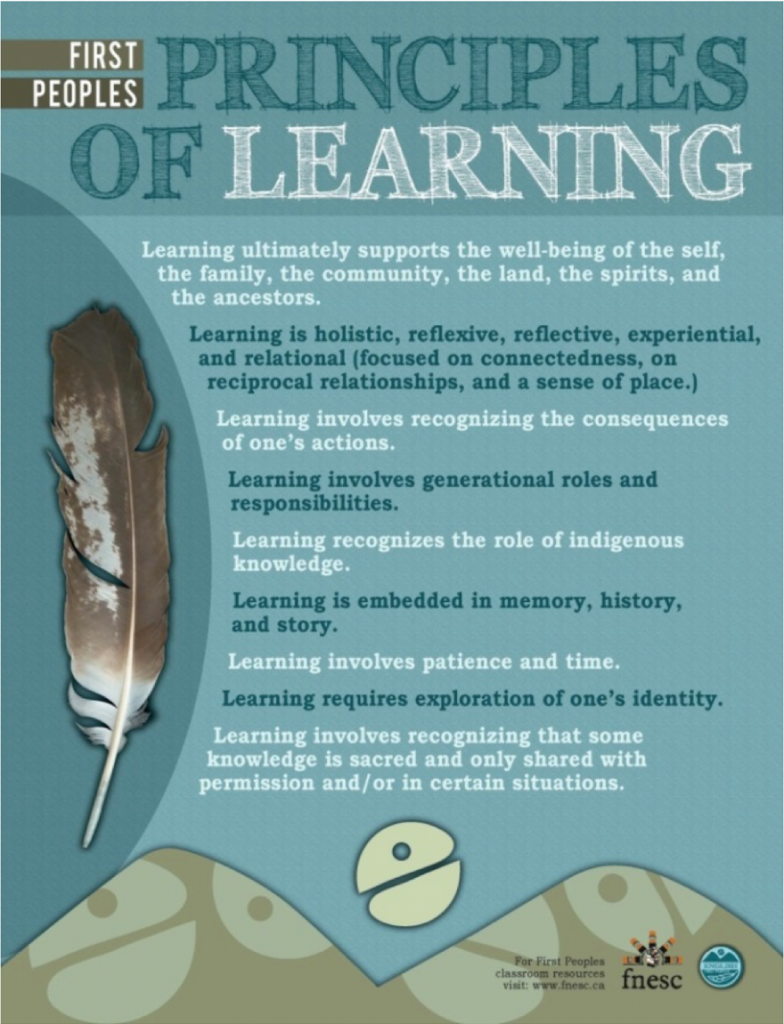
Connection to First Peoples Principles of Learning
-
Learning is holistic and relational
-
Learning involves exploring one’s identity
-
Learning is connected to community and culture
Competency 2: Developing a Growth Mindset Through Collaboration
A growth mindset is the belief that abilities and understanding grow through effort, practice, and feedback. Teachers with a growth mindset see challenges as opportunities to learn rather than failures.
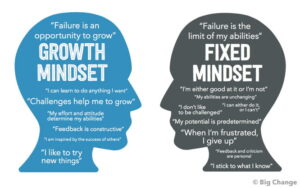 Key Ideas
-
Learning takes time and patience
-
Mistakes are part of the learning process (even for teachers)
-
Feedback supports growth
Connection to First Peoples Principles of Learning
-
Learning involves patience and time
-
Learning involves recognizing the consequences of one’s actions
-
Learning requires exploration of one’s identity
Competency 3: Cultivating a Culture of Professionalism
Professionalism in teaching involves acting ethically, respectfully, and responsibly. Teachers are trusted members of their communities, and their actions directly impact students and families.
Key Ideas
-
Respect and dignity for all students
-
Confidentiality and professional boundaries
-
Openness to feedback and reflection
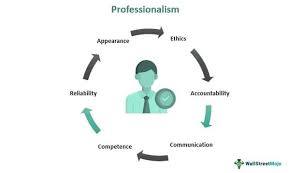 Connection to Professional Standards
-
Following the Professional Standards for BC Educators
-
Adhering to the Code of Ethics
-
Seeking guidance when unsure
Competency 4: Understanding the Complexity of Teaching and Learning
Teaching and learning are complex and unpredictable. Classrooms are made up of many relationships and factors that influence learning in different ways.
 Key Ideas
-
Learning is not linear
-
Classrooms are dynamic systems
-
Uncertainty is part of teaching
Connection to First Peoples Principles of Learning
-
Learning involves embracing uncertainty (Cwelelep)
-
Learning is relational and experiential
-
Learning happens over time
Reflection
(Competencies 1-4)
As I continue my journey toward becoming a music teacher, these four competencies have helped shape how I see myself as an educator. Teaching music while also teaching all subjects in in-situ settings has shown me that learning is deeply connected, relational, and constantly evolving. Music especially reminds me that growth takes time, practice, and patience, and that mistakes are where the best learning happens.
Worldview awareness has challenged me to reflect on my own experiences with music and schooling and to recognize that students bring their own stories, cultures, and ways of knowing into the classroom. Teaching across subject areas has reinforced the importance of honouring multiple perspectives and finding meaningful connections between learning experiences.
Developing a growth mindset through collaboration has been essential in my teacher education program. Learning alongside classmates and receiving feedback from instructors has helped me view challenges as opportunities rather than setbacks. Observing my instructors model reflective practice and adaptability has shown me the value of collaboration and lifelong learning.
Professionalism and an understanding of the complexity of teaching have also become clearer through in-situ experiences. Teaching is rarely predictable and flexibility are essential.
These competencies remind me that effective teaching is not about having all the answers, but about being open to learning, responsive to students, and committed to growth. They guide me as I work toward becoming a thoughtful, reflective, and responsive music educator.
(Competencies 5–12)
As I move through my experience as an Education Assistant and my in-situ experiences, these competencies have deepened how I understand relationships, inclusion, and care in the classroom. Building respectful, trusting relationships with students has shown me how important it is to create spaces where students feel safe to take risks, express themselves, and be seen. Music has been especially powerful for connection, helping students communicate and belong even when words feel hard.
Focusing on inclusion and student well-being has reminded me that learning cannot happen when students don’t feel safe or valued. This is apart of ‘how learners learn’ (Competency 12). Being attentive to students’ emotional needs, diverse identities, and individual strengths has shaped how I think about classroom community. I am learning that teaching is not just about content, but about caring and creating environments where every learner feels they belong.
Through Collaboration and Community Partnerships (Competencies 5-8), collaboration with families, school staff, and the wider community has helped me see teaching as shared work. Also, sharing ideas in our personal classes and having my classmates share ideas to build on to my activities. Learning does not happen in isolation, and students are supported best when educators work together with those around them. In music, this has shown up through performances, community connections, and shared celebrations of learning.
These competencies have also strengthened my understanding of ethical practice, responsibility, and professionalism. Being reflective, mindful of my impact, and accountable to students and colleagues continues to shape how I show up as a future teacher. Together, these competencies remind me that teaching is relational, ethical, and grounded in care, and they guide me as I work toward becoming a compassionate and inclusive music educator
References
Teacher Education Program Competency Guide | UVIC Teacher Education
Thank you for this post. It is a nice extension of your Competency presentation.
Thank you,
Judi