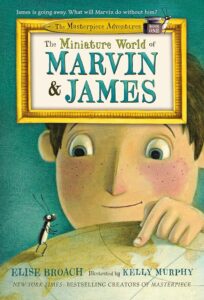
Novel Study: The Miniature World of Marvin and James
This Grade 2 novel study builds reading comprehension, communication, and creative thinking through interactive and student-centered learning experiences.
Core Competencies
-
Communication: Communicating, Collaborating
-
Thinking: Critical and Reflective Thinking, Creative Thinking
-
Personal and Social: Positive Personal and Cultural Identity
Big Ideas
-
Language and story can be a source of creativity and joy
-
Playing with language helps us discover how language works
Essential Questions
-
How does playing with stories and language help us understand how stories work?
-
How do stories help us imagine new worlds and understand ourselves and others?
Key Curricular Competencies
Comprehend and Connect
-
Use developmentally appropriate reading, listening, and viewing strategies
-
Connect personal experiences and prior knowledge to texts
Create and Communicate
-
Exchange ideas and perspectives to build shared understanding
-
Explore oral storytelling
-
Communicate using sentences and conventions of Canadian spelling, grammar, and punctuation
Key Content
-
Story elements (characters, setting, beginning/middle/end, problem and solution)
-
Reading strategies and processes
-
Vocabulary development
-
Language features, structures, and conventions
Indigenous Perspectives
Indigenous perspectives are honoured through a focus on relationship, respect, oral storytelling, community learning, and multiple perspectives. Students explore how characters experience the world differently and engage in shared discussion, observation, and reflection, aligning with Indigenous ways of knowing and being.
Unit Concepts:
-
Concept 1: Sequencing story events and making predictions using images and the book cover
-
Concept 2: Identifying characters and settings through reading, movement, and discussion
-
Concept 3: Developing reading skills, vocabulary, and personal connections through guided reading
-
Concept 4: Exploring character feelings and perspectives using drama, visualization, and discussion
-
Concept 5: Understanding punctuation and how it changes meaning and expression in text
-
Concept 6: Sequencing events and comparing character emotions using timelines and vocabulary
-
Concept 7: Applying problem-solving and creativity through a miniature engineering design challenge
-
Concept 8: Making connections between texts and expressing emotions through writing postcards
-
Concept 9: Demonstrating comprehension by creating and performing an alternative ending
-
Concept 10: Retelling and sequencing the story using story rocks and oral storytelling
The unit encourages creativity, collaboration, and a love of reading while helping students understand how stories work and how language can be playful and meaningful.
Reflection:
Creating this novel study helped me deepen my understanding of how literacy learning can be intentionally designed to support students. Planning the unit with a fellow classmate, allowed me to think carefully about how reading comprehension skills such as identifying characters, setting, sequencing events, and understanding problem–solution can be developed through engaging, developmentally appropriate activities.
As we planned the lessons, I became more aware of the importance of offering multiple ways for students to interact with a text. Incorporating movement, drama, visual supports, discussion, and creative response activities reinforced for me how multimodal approaches can support diverse learners and increase student engagement. I enjoyed bringing creative concepts and having the engineering project. I also gained a stronger appreciation for how assessment can be embedded naturally through observation, conversation, and student work rather than relying solely on formal tasks. I am learning this through my Evaluating Class.
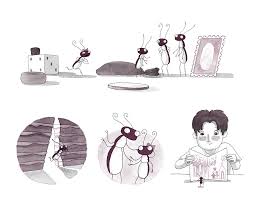
Designing this novel study highlighted the role of literature in supporting social and emotional learning. The themes of friendship, boredom, fear, and problem-solving in The Miniature World of Marvin and James provided meaningful opportunities for students to make personal connections and explore different perspectives. This reinforced my understanding of how stories can help young learners build empathy and a sense of community.
Overall, this planning experience strengthened my confidence in designing a literacy units that align curriculum, assessment, and learning intentions. It was planned and student-centered novel study that can foster both strong literacy development and a genuine enjoyment of reading.