First week of class:
6 boxes of something inside of them- but were not allowed to open them
Making observations (shaking the boxes, listening)
Forming hypotheses (predicting what’s inside)
Using indirect evidence (you can’t see inside)
Collaborating and arguing from evidence
Revising ideas based on discussion
This mirrors how scientists study things they cannot directly observe (air)
At the start of the semester, our class explored how scientists think and investigate the world through a hands-on activity with mystery boxes. This exercise invited us to observe, predict, and reason using indirect evidence, giving a small taste of how scientific inquiry works in real life. It also offered a chance to connect these practices to the BC Science curriculum, which emphasizes curiosity, evidence-based reasoning, and collaborative problem-solving.
During the activity with the six mystery boxes, my group and I were asked to determine what was inside each box without opening them. We could only shake the boxes, listen to the sounds, and discuss our observations with each other. At first, I felt uncomfortable not knowing the “right answer” and wanted confirmation which is part of my personality.
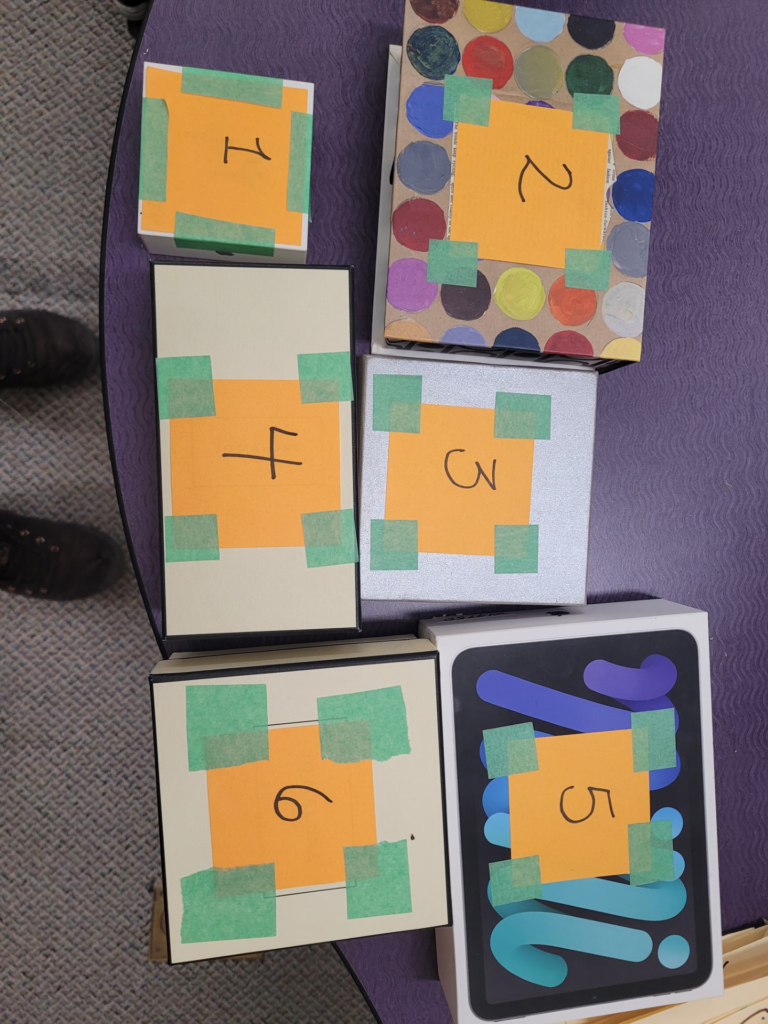
My ah-ha moment came when I realized that this discomfort is exactly what scientists experience in real scientific investigations. We were using indirect evidence to make predictions, just like scientists do when studying things they cannot directly see. I also noticed how important collaboration was. Hearing different interpretations from my group helped me rethink my own ideas and consider alternative explanations.
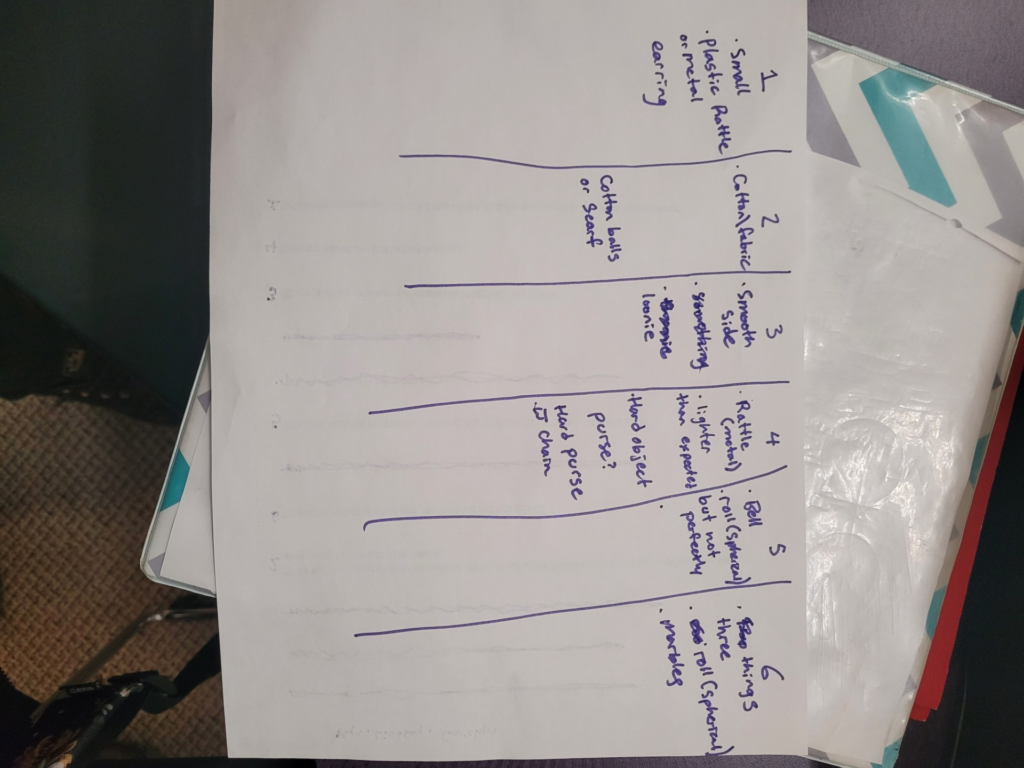
This showed me that science is not just about facts, but about communication, reasoning, and evidence-based argument.
This activity connects directly to the BC Science curriculum, as it develops students’ inquiry skills, including making careful observations, forming predictions, using evidence, and communicating scientific ideas. It also supports the Big Idea that “scientific understanding evolves as we observe, question, and test ideas,” showing students how to think like scientists rather than just memorize facts.
This mystery box activity reflects how scientists in the real world use observation, indirect evidence, prediction, and revision to build understanding, even when they cannot see the full system they are studying. Mystery box investigations are used in classrooms to help students distinguish between observation and inference, develop hypotheses, and revise ideas based on evidence and discussion, which mirrors actual scientific reasoning and the nature of science as described in the Mystery Box Challenge educational resource. The “Mystery Box Challenge” article describes classroom activities where students explore the nature of science by examining closed boxes and using indirect evidence to make predictions about what’s inside. These activities help students practice scientific thinking such as forming models, testing ideas, revising explanations, and communicating findings—showing that science involves inference, creativity, collaboration, and reasoning based on evidence
As a future teacher, this activity helped me understand the value of inquiry-based learning. Instead of giving students answers, allowing them to explore, make predictions, and defend their ideas can lead to deeper understanding. I realized that learning science is not about being right. It’s about thinking like a scientist.
Resources
“The Mystery Box Challenge: Explore the Nature of Science.” Scienceinschool.org, 31 July 2024, scienceinschool.org/article/2022/mystery-box-challenge/. Accessed 26 Mar. 2026.